UAE’s Liwa University Partners with AIJRF to Advance Agentic AI in Higher Education
The agreement aims to support the development of academic curricula, enhance the capabilities of faculty members, researchers, and students, and promote innovation across various scientific and applied disciplines.

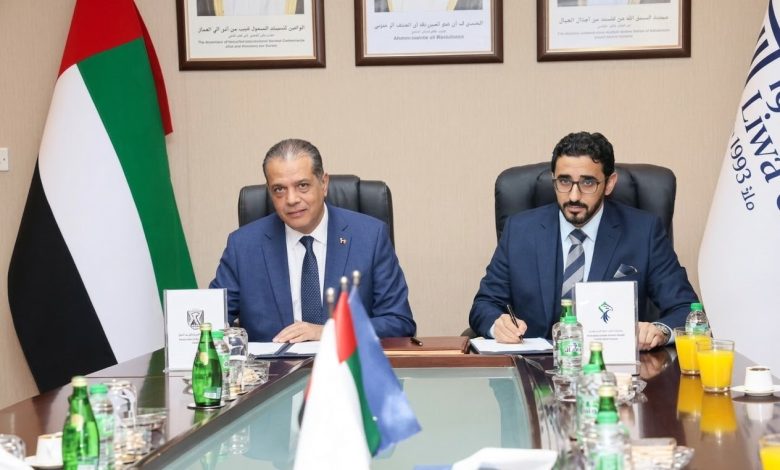
Liwa University and the Artificial Intelligence Journalism for Research and Forecasting (AIJRF) have signed an academic and research MOU to strengthen the integration of Agentic AI technologies and develop specialized AI agents for higher education and scientific research. The agreement aims to support the development of academic curricula, enhance the capabilities of faculty members, researchers, and students, and promote innovation across various scientific and applied disciplines.
Liwa University President: Agentic AI Is Reshaping the Future of Higher Education
Professor Mohamed Mahjoub Dhiaf, President of Liwa University, said the cooperation with AIJRF represents a strategic step toward expanding the use of advanced technologies in education and developing an academic environment capable of keeping pace with rapid advances in artificial intelligence, particularly agentic applications that offer new levels of interaction, productivity, and innovation.
“We are entering a new phase in the development of higher education, one that goes beyond using AI tools in teaching and scientific research to designing specialized AI agents capable of assisting faculty members, researchers, and students in performing a wide range of academic and research tasks. Through this partnership, we look forward to developing practical educational applications that enhance the quality of learning outcomes, open new opportunities for research and innovation, and prepare our graduates to work in professional environments that combine human capabilities with intelligent technologies.”
– Professor Mohamed Mahjoub Dhiaf, President, Liwa University
Professor Dhiaf emphasized the importance of developing faculty members’ skills in designing and deploying intelligent agents in classrooms and research laboratories, enabling more personalized and interactive learning experiences and helping students acquire problem-solving, critical thinking, and intelligent systems skills.
He noted that Liwa University’s membership in the Arab Index for Artificial Intelligence in Universities strengthens its participation in regional research efforts to measure the development of AI adoption in higher education, while supporting the exchange of academic expertise and the advancement of data-driven institutional practices.
Abdulzaher: Moving from AI Tools to Academic Teams Powered by Agentic AI
Dr. Mohamed Abdulzaher, CEO of the Artificial Intelligence Journalism for Research and Forecasting (AIJRF), said the agreement aims to develop a new practical model for integrating Agentic AI into higher education institutions by equipping faculty members and researchers with the skills required to design and manage specialized AI agents across various academic disciplines.
“We are witnessing a fundamental transformation in the future of higher education, in which professors and researchers are moving beyond simply using AI tools to leading integrated teams of AI agents. These agents will support curriculum design, educational content development, learning outcome analysis, the management of certain stages of scientific research, and the development of academic projects. Our goal is to enable universities to build intelligent educational and research ecosystems led by human expertise and supported by the capabilities of Agentic AI.”
– Dr. Mohamed Abdulzaher, CEO, Artificial Intelligence Journalism for Research and Forecasting (AIJRF)
Dr. Abdulzaher explained that this new phase requires the development of advanced academic skills, including advanced prompt engineering, intelligent agent design, multi-agent system management, the automation of academic and research processes, and the evaluation and verification of intelligent system outputs.
He emphasized that the cooperation with Liwa University forms part of AIJRF’s strategy to expand the integration of Agentic AI across university disciplines, particularly theoretical and applied fields that offer significant opportunities to benefit from intelligent systems in improving the quality of education and scientific research.
Areas of Cooperation
The agreement aims to facilitate the transition from the conventional use of generative AI tools to the development of intelligent academic ecosystems based on AI agents capable of performing multiple educational and research tasks, coordinating with one another, analyzing data, supporting academic content development, and contributing to improved teaching and assessment methods, under human supervision and in accordance with academic governance and integrity standards.
Areas of cooperation include the application of Agentic AI in media and communication, social sciences and humanities, medical and health sciences, business administration, and scientific research. The agreement also covers the development of specialized hands-on training programs in AI agent design and management, as well as the establishment of hybrid teams bringing together faculty members, researchers, and intelligent agents.
The agreement also includes Liwa University’s membership in the Arab Index for Artificial Intelligence in Universities (AIU), as part of efforts to strengthen research collaboration, measure the adoption of AI technologies and agentic applications in higher education, and support the development of academic policies and practices associated with the transition toward smart universities.
Five Academic Sectors
The proposed areas of cooperation include developing specialized AI applications and agents across five key sectors:
Media and Communication: Developing intelligent agents to support multimedia content production, audience trend analysis, fact-checking, digital platform management, and the design of media and communication campaigns.
Social Sciences and Humanities: Deploying intelligent agents to analyze social data, support survey research, examine trends and behaviors, develop research scenarios, and forecast societal transformations.
Medical and Health Sciences: Developing educational and research applications powered by AI agents to support medical training and simulation, research data analysis, and health education content development, while ensuring data protection and specialized human oversight.
Business Administration: Applying multi-agent systems to market analysis, intelligent marketing, strategic planning, financial and administrative performance analysis, and the preparation of feasibility studies and applied projects.
Scientific Research and Academic Publishing: Designing specialized research agents to search scientific literature, analyze previous studies, organize references, process research data, and support the preparation of scientific papers in accordance with academic integrity and international publishing standards.
Developing Academic Programs and Building Teams of Intelligent Agents
The agreement provides opportunities for cooperation in organizing workshops and practical training programs for faculty members, researchers, and students, focusing on developing personal and specialized AI agents and connecting them within multi-agent systems capable of coordinating academic and research tasks.
The cooperation also includes benefiting from AIJRF’s expertise and programs in academic curriculum design and AI integration, particularly the specialized international academic program, “Foundations of Academic Program Development and AI Integration” (FAPAI), which aims to equip academic leaders and faculty members with the skills needed to develop academic programs and courses in line with labor market requirements and technological advancements.
The partnership focuses on expanding the practical applications of Agentic AI within university curricula, enabling students to design projects involving intelligent agents to address real-world challenges in their respective disciplines, rather than limiting their learning to theoretical knowledge of AI technologies.
Source:TechAfrica News