Africa’s Youngest AI Founder: 17-Year-Old Okechukwu Nwaozor Unveils OkeyAI, a True From-Scratch Rival to Global Giants

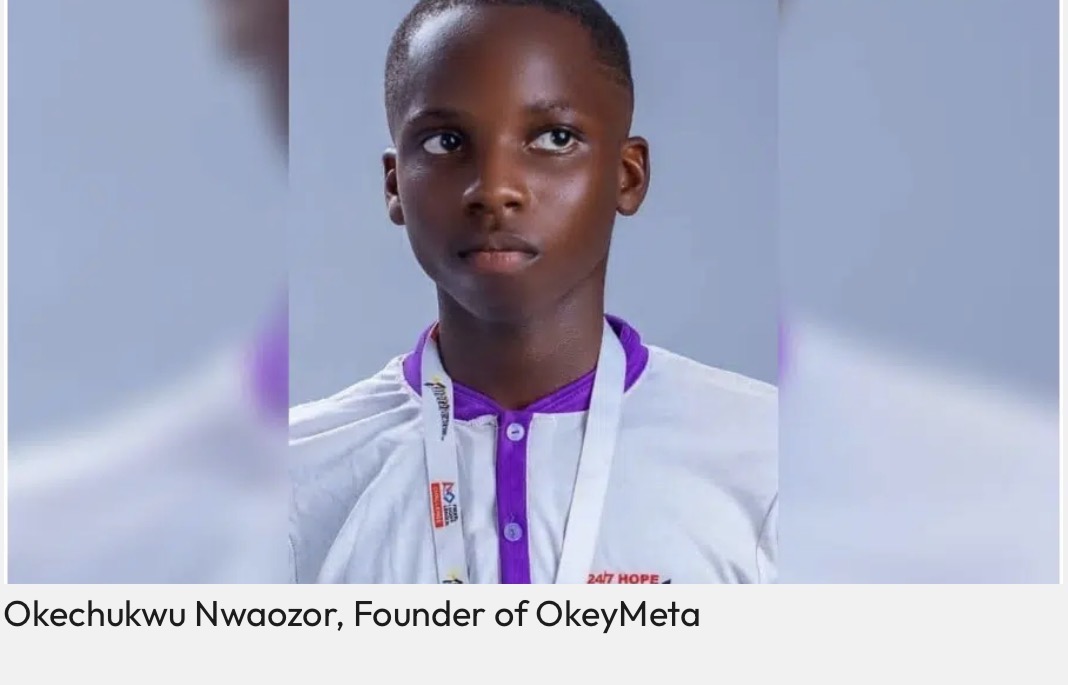
When Okechukwu Nwaozor first mentioned his intention to develop a large language model capable of competing with ChatGPT, the reaction from many, including this writer, was one of polite skepticism. At seventeen, freshly out of secondary school and entirely self-taught, Nwaozor hardly fit the profile of someone poised to challenge a company valued at half a trillion dollars.
The funding figure he cited—₦2.7 million raised from friends, family, and small supporters—only deepened the impression of a project operating on an entirely different scale from the tens of billions invested in OpenAI.
Yet the product exists. OkeyAI 4.0 DeepCognition, the flagship model of Nwaozor’s company OkeyMeta Ltd, is publicly accessible and performs at a level that belies its modest origins.
During testing, when asked whether it was built on an existing open-source foundation, the model responded clearly:
“I am OkeyAI 4.0 DeepCognition, developed from scratch by OkeyMeta Ltd in Nigeria using the Situated Symbolic Artificial Intelligence Language Model (SSAILM) architecture. My core team consists of Okechukwu Goodnews Nwaozor (founder and lead ML engineer), Precious Obiesie (co-founder), Raji Abdulazeem Adeyemi (lead data analyst), Shuaib Ali Abiodun (head of marketing), and Woleola Abdullateef (product designer).”
The inspiration for OkeyMeta

Independent checks confirmed the claim.
Nwaozor’s journey began long before the 2022 launch of ChatGPT. As a young teenager, he was fascinated by Google’s search engine and later by early conversational bots in Nigerian developer communities. By 2022, at age fourteen, he had started collecting and cleaning datasets. Subsequent iterations relied on openly available resources and rented cloud compute.
Future of OkeyMeta
The company name, OkeyMeta, combines the founder’s nickname with a nod to the concept of transcendence in technology. A small team of undergraduate collaborators assisted with data preparation, pipeline development, and interface design.
While OkeyAI is orders of magnitude smaller than frontier models from OpenAI, Anthropic, or Google, Nwaozor emphasises that it is a true foundation model, not a fine-tune of Llama, Mistral, or any other existing base. He points to other African LLM projects that began as derivatives and argues that the distinction matters for genuine technical sovereignty.
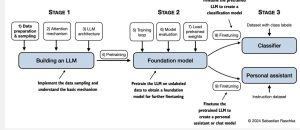
Building an LLM from scratch
Current usage stands at approximately 1,000 daily chatbot interactions and 8,000 registered developers on the OkeyMeta API platform, with roughly half actively integrating it into their applications. Access remains free as the team prioritises adoption and visibility.
Nwaozor acknowledges several technical advantages in the current implementation, including unrestricted context windows and agent frameworks that execute actions only when specific conditions are met. He claims lower hallucination rates on certain benchmarks compared with some larger commercial models, though independent third-party evaluations are still pending.
Operating costs, primarily Google Cloud GPU rental, remain manageable at present but will rise sharply with increased traffic. The initial ₦2.7 million runway is nearing its end, and the team is in discussions with prospective investors.
Three years after he was widely dismissed on social media for announcing the project, Nwaozor has delivered a functional, original large language model developed entirely in Nigeria by a team whose average age is barely over twenty.
The platform is live. Developers can test it today. And the founder, still too young to vote in many countries, continues to iterate.