The Malawi Communications Regulatory Authority (MACRA) has earned widespread praise for its ambitious initiative to construct computer laboratories in public schools nationwide, marking a transformative step toward enhancing digital literacy among Malawian students. The regulatory body’s commitment to bridging the digital divide demonstrates how strategic investment in educational infrastructure can reshape the future of learning in developing nations.
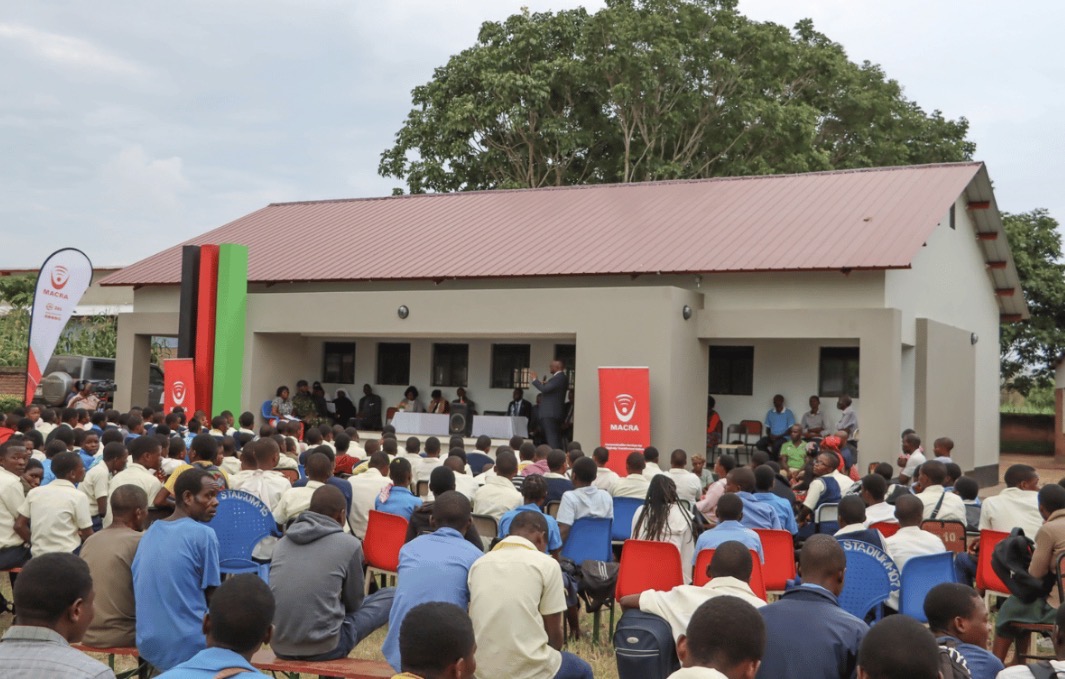
Minister of Information and Communications Technology, Dr. Shadric Namalomba, commended MACRA during an official visit to Saint Peter’s Community Day Secondary School in Balaka District on Wednesday. During his inspection of the newly constructed facilities, Dr. Namalomba emphasized the far-reaching impact of providing students with access to modern computer laboratories and digital learning resources.
Dr. Namalomba articulated how increased access to computers in public schools equips learners with essential digital skills that are increasingly vital in today’s interconnected world. The minister outlined several key benefits of the computer laboratory construction program, explaining how digital literacy modernizes traditional teaching methods while simultaneously promoting independent research capabilities among students.
The initiative directly supports Malawi’s long-term development goals by preparing young people for technology-driven careers in sectors ranging from information technology to digital entrepreneurship. As global economies continue their rapid digital transformation, ensuring Malawian students develop strong technical competencies positions them to compete effectively in both local and international job markets.
According to Dr. Namalomba, these computer labs represent more than just physical infrastructure. They symbolize a fundamental shift in educational philosophy, one that recognizes technology as an essential component of quality learning rather than a luxury reserved for urban or private institutions. This democratization of digital access helps level the playing field for rural students who have historically faced significant disadvantages in accessing technological resources.
Member of Parliament for Balaka Ngwangwa Constituency, John Bamusi, praised both the government and MACRA for their substantial investment in educational technology infrastructure. Bamusi described the computer laboratory construction program as tangible evidence of the administration’s commitment to ensuring equitable access to quality education across all regions of Malawi, regardless of geographic or economic barriers.
The parliamentarian emphasized that digital transformation initiatives in rural areas like Balaka District carry particular significance because they directly address longstanding inequalities in educational resource distribution.
By prioritizing computer lab construction in community day secondary schools serving predominantly rural populations, MACRA demonstrates an understanding that genuine national development requires inclusive approaches that leave no community behind.
Bamusi noted that the digital literacy skills students acquire through these computer laboratories will have multiplier effects throughout their communities. As young people become proficient in using technology, they can share knowledge with family members, contribute to local businesses adopting digital tools, and eventually return as professionals who drive economic growth in their home districts.
Saint Peter’s Community Day Secondary School Benefits from Digital Infrastructure
Sister Legina Komicho, headmistress of Saint Peter’s Community Day Secondary School, expressed profound gratitude for the computer laboratory intervention. Sister Komicho highlighted that her institution, which serves 268 students from surrounding communities, will experience transformative benefits from the enhanced digital facilities now available on campus.
The headmistress explained how the computer lab will fundamentally improve teaching delivery across multiple subject areas. Teachers can now incorporate multimedia presentations, interactive learning modules, and digital simulations that make abstract concepts more concrete and engaging for students. This modernization of pedagogical approaches promises to boost academic performance by catering to diverse learning styles and maintaining higher levels of student engagement.
Beyond immediate academic benefits, Sister Komicho emphasized how computer laboratories prepare students for further education opportunities. As colleges and universities increasingly require digital competency for admission and success, students from Saint Peter’s will now enter higher education with foundational technology skills that their peers in better-resourced institutions take for granted.
The headmistress also noted practical applications extending beyond traditional academic subjects. Students can develop valuable skills in word processing, spreadsheet management, internet research, and digital communication that directly translate to employment opportunities even for those who do not pursue university education.
The Malawi Communications Regulatory Authority’s computer laboratory construction initiative aligns closely with national digital transformation strategies outlined in various government policy documents. By focusing resources on educational institutions, MACRA addresses the foundational requirement for any successful digital economy: a population equipped with relevant technological skills from an early age.
Industry experts have long recognized that sustainable digital transformation requires investment in human capital development alongside technical infrastructure deployment. The computer labs being constructed in public schools represent this holistic approach, ensuring that expanded internet connectivity and digital services will find users capable of leveraging these resources effectively.
The initiative also demonstrates effective collaboration between regulatory authorities and the education sector. MACRA’s mandate traditionally focuses on telecommunications oversight, but by extending its vision to include educational infrastructure, the authority shows innovative thinking about how digital literacy foundations are established at the community level.
Malawi, like many developing nations, faces a significant digital skills gap that threatens to limit economic opportunities for its growing youth population. International research consistently shows that countries with higher levels of digital literacy experience stronger economic growth, better healthcare outcomes, and more engaged civic participation. By investing in computer laboratories for public schools, MACRA directly tackles one of the root causes of this skills deficit.
The timing of this initiative proves particularly crucial as the global economy continues accelerating toward automation, artificial intelligence, and digital platforms. Students graduating without basic computer competency face severely limited career prospects in an employment landscape where even traditional occupations increasingly require technological proficiency.
Furthermore, computer laboratories in schools provide safe, structured environments for young people to develop healthy digital habits under educator supervision. As internet access expands across Malawi, ensuring students first encounter technology in educational contexts helps promote responsible usage patterns and critical evaluation of online information.
The computer laboratory construction program at Saint Peter’s and other public schools throughout Malawi represents an important milestone in the broader digitalization of the nation’s education system. However, experts emphasize that hardware installation alone cannot guarantee improved educational outcomes without corresponding investments in teacher training, curriculum development, and ongoing technical support.
Education technology specialists recommend that MACRA and the Ministry of Information and Communications Technology coordinate closely with the Ministry of Education to ensure teachers receive adequate professional development in integrating computers into their lesson plans effectively. The most successful educational technology implementations globally feature sustained teacher support rather than one-time training sessions.
Additionally, sustainable models for computer laboratory maintenance and upgrades will prove essential for long-term success. Technology equipment requires regular servicing, software updates, and eventual replacement as systems become obsolete. Establishing clear maintenance protocols and dedicated budgets for ongoing technology support will help ensure these facilities continue benefiting students for years to come.
The initiative also raises important questions about digital content development. While having computer access represents a crucial first step, maximizing educational impact requires relevant, culturally appropriate digital learning materials in languages students understand. Developing a robust library of educational software, e-learning modules, and digital resources tailored to the Malawian curriculum should complement the physical infrastructure investment.
The Malawi Communications Regulatory Authority’s commitment to constructing computer laboratories in public schools across the country marks a significant step toward realizing the vision of a digitally literate nation prepared for the challenges and opportunities of the 21st century. By equipping students with essential technology skills, modernizing teaching approaches, and demonstrating commitment to equitable access, this initiative lays groundwork for sustainable development.
As demonstrated during Minister Namalomba’s visit to Saint Peter’s Community Day Secondary School in Balaka District, the tangible impact of these computer labs extends far beyond the physical buildings themselves. They represent investment in human potential, confidence in Malawi’s youth, and recognition that digital inclusion must begin in classrooms if the nation hopes to build a truly tech-savvy future workforce capable of competing in an increasingly technology-driven world.